End-of-life clarity
Calm structure for life´s most human conversations
End-of-life clarity is not about expecting the worst.
It is about protecting the people you love and reducing chaos when it matters most.
Whether death comes suddenly or unfolds slowly through illness, there are decisions to make, documents to prepare, and conversations to have that determine how things unfold.
Here you´ll find a structured, grounded path forward.
On this page you´ll find:
| Documents & legacy clarity for expats
| Support During Serious Illness & End of Life
| End-of-life presence
| Working together
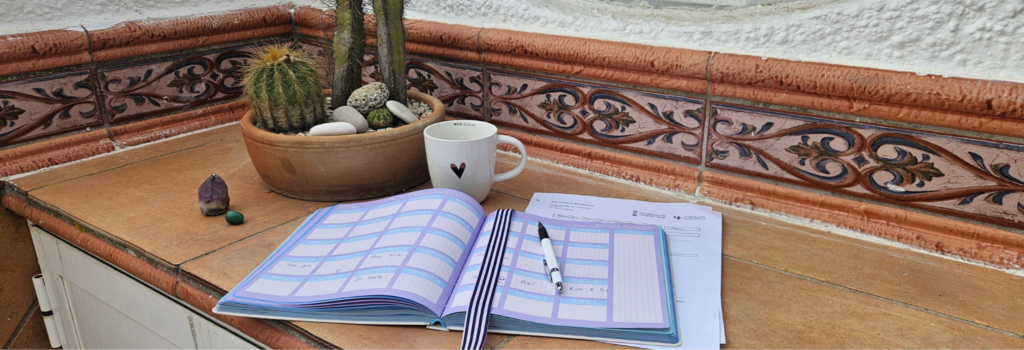
Documents & legacy clarity for expats
When I became an end-of-life doula, I thought I understood the importance of clarity.
Then I moved countries again and realized how much changes when you cross a border. Not just paperwork. Everything. The options you thought you had. The customs you assumed were normal.
Even knowing how important this work is, it is surprisingly easy to postpone. Easy to think: I’ll deal with it once I’m more settled.
But underneath that resistance sits a quiet question.
If something happened here, would the people I love even know where to start?
Because when something happens, questions surface fast.
Where are the documents?
Who has access to the bank accounts?
Which country handles what?
Who needs to be informed?
Sometimes death comes slowly through illness. Sometimes it comes suddenly.
You leave home assuming you’ll return. You don’t.
And in the middle of shock and grief, practical decisions still have to be made.
This is where clarity matters.
Together we gather the essential documents, organize access to what matters, and write down your wishes clearly: creating a system the people around you can actually follow.

Support During Serious Illness & End of Life
When recovery is no longer the most likely outcome, the questions change.
You may still be living your life, making appointments, adjusting to treatment, but something has shifted.
Time feels different.
Priorities become clearer.
Decisions can no longer be postponed indefinitely.
This is the moment to plan consciously.
Not from fear.
Not from panic.
But from clarity.
Especially for those living abroad. Illness in another country adds another layer.
In this phase we look at what matters most in the time ahead.
Do you want to remain where you are, or return to your country of origin?
Would your family know how the medical and legal systems work here?
How would decisions be made if you could no longer speak for yourself?
What practical steps are needed if borders are involved?
What conversations still need to happen?
These are not abstract questions. They are real. And they matter.
Together we create structure around the emotional and practical realities of serious illness. Clear wishes. Clear roles. Clear communication. So that when the time becomes more fragile, the foundation is already in place.
Preparation does not happen by downloading a template and hoping for the best.
It begins with understanding your specific situation.
You may start with scattered thoughts and unanswered questions.
In the end, you will have your wishes, your essential documents, and your decisions gathered in one clear place. Labeled. Structured. Understandable.
Something solid. Something someone else can rely on.

End-of-life presence
There comes a point when planning is no longer the focus. Presence becomes the focus.
When life is nearing its end, what often matters most is steadiness. A calm room. Clear communication. Someone who is not afraid of what is happening.
End-of-life support can be quiet and practical at the same time. Sitting at the bedside. Holding conversation when it wants to happen, or silence when it doesn´t. Supporting comfort. Helping create dignity in small human moments. At times, sound may gently support the atmosphere, a bowl, a soft tone, something grounding.
This work does not replace medical care. It stands alongside it.
It can mean lifting small burdens so family members can simply be family. Making coffee. Holding the space. Staying when others need rest. Bringing a grounded presence into a room that might otherwise feel heavy or chaotic.
End-of-life presence is steady. It brings calm structure to a time that asks for depth, care, and humanity.
Working together
People arrive here at different moments.
Some want to organize their documents and create practical clarity.
Some are navigating serious illness and need space for honest conversations and guidance.
Some are in the final phase of life and need quiet presence.
If you are wondering whether this work could support your situation, the best place to start is simply a conversation.

Document & Legacy Clarity for Expats
This work is usually done in two to three sessions, depending on your situation.
Sessions are €65 per hour.
Together we organize essential documents, clarify wishes, and create a structure that the people around you can actually follow if something happens.
Support During Illness or End-of-Life
Every situation is different.
Sometimes people want guidance and conversation.
Sometimes they want someone steady in the room.
Sometimes the support is practical, sometimes simply presence.
Because of that, the structure and fees are discussed together, depending on what is needed in that moment.
Connect
If you feel this work might be helpful for you or someone close to you, you are welcome to reach out.
We can begin with a simple conversation and see what would be supportive.
Frequently Asked Questions
When you live abroad, more than one system may be involved. Local procedures apply first, but family members in another country may also need to act. Documents may be stored in a different language. Legal rules around inheritance or burial may not match the ones your relatives assume.
In countries like Spain, practical decisions are often made quickly. If your wishes are not clearly written down and accessible, others may have to decide on your behalf under time pressure.
Clarity does not remove grief. But it prevents additional confusion across borders
In many cases, European regulations allow you to choose the law of your nationality to apply to your estate, even if you live in Spain. However, this choice must be clearly expressed in a valid will.
If no such choice is made, Spanish inheritance rules may apply based on your habitual residence. A will drafted in another country is not automatically invalid in Spain, but practical coordination may still be required.
This is where clarity becomes important. Part of this work is helping you understand which legal framework may affect you and when it is wise to consult a notary or legal professional.
No. This work does not constitute legal advice, and I do not draft legally binding documents.
My role is to help you clarify your wishes, organize your information, and understand which professional steps may be required. When you meet with a lawyer or notary, you do so prepared, structured, and informed.
This often makes the legal process simpler, more efficient, and more aligned with your intentions.
Yes, within the scope of non-medical support.
End-of-life presence means emotional and practical steadiness. Sitting at the bedside. Holding space. Supporting conversations. Offering calm structure for family members who may feel overwhelmed.
I do not replace nurses, doctors, or hospice care. Medical decisions and treatment remain with healthcare professionals. My role is human support alongside that care.
Yes. Everything you share in this process is treated with discretion and respect.
You decide what is documented, how it is stored, and who has access to it. My role is to help you create clarity, not to hold or control your personal information.
Where required, this work follows applicable privacy and data protection regulations.
Each situation is different, especially when cross-border elements are involved. Some people need a focused review. Others require more in-depth guidance and coordination.
After an initial conversation, I provide a clear proposal tailored to your situation. There are no hidden steps and no open-ended commitments.